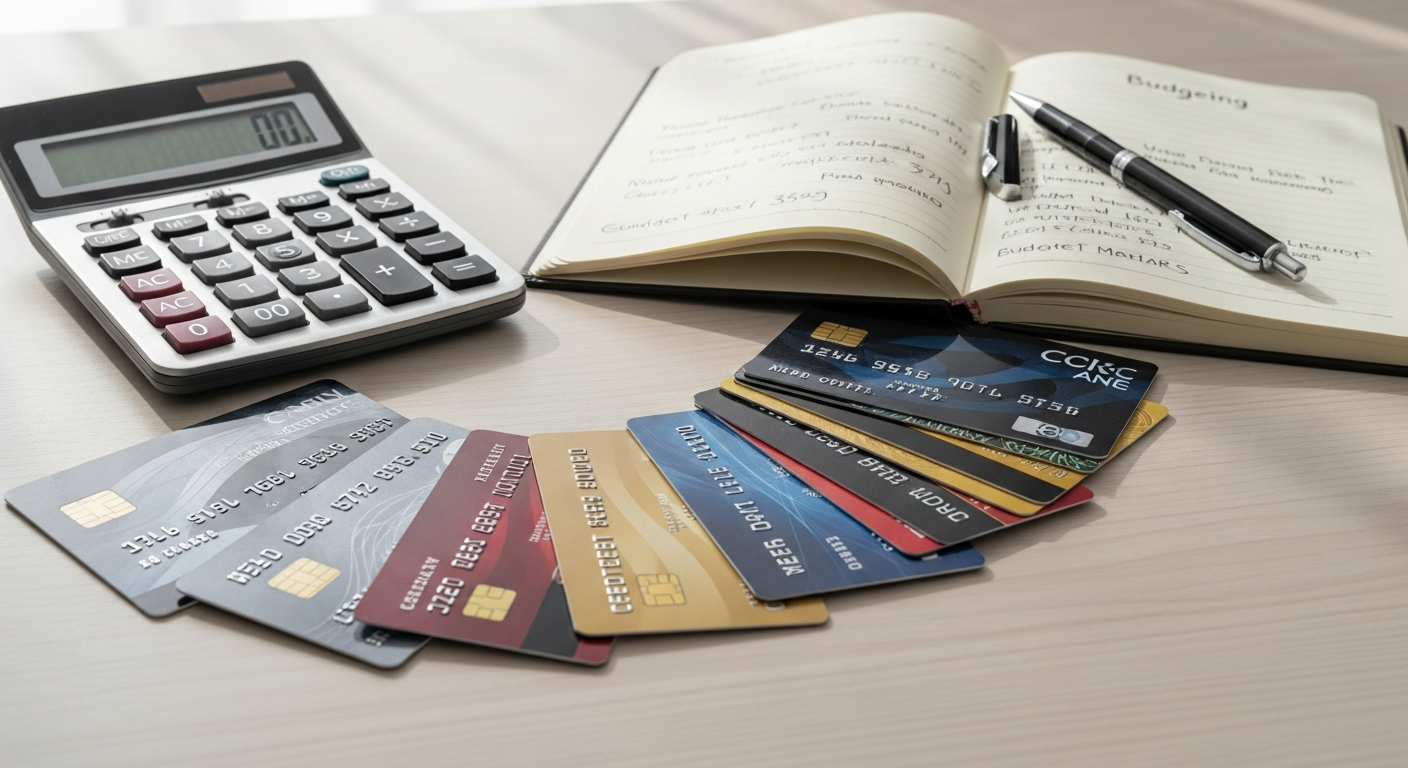
Introduction: The Modern Trap of Revolving Debt
Credit-card interest and minimum-payment formulas can make balances expensive to carry. Use each card's current statement—not a national average—to identify the APR, balance subject to interest, minimum payment, fees, and any promotional expiration that applies to your account.
The Minimum Payment Trap
Paying only the minimum on a $5,000 balance at 20% APR takes over 20 years to pay off and costs $7,700 in interest—more than the original debt. Credit card companies profit from your patience.
This guide provides a complete, psychologically-aware plan for escaping credit card debt permanently—not just paying it off, but building the habits and systems that prevent it from returning.
1. How Credit Card Interest Really Works
Understanding interest mechanics is the first step to escaping debt. Credit card interest compounds daily, not monthly, making it more expensive than most people realize.
Daily Interest Calculation
Your APR is divided by 365 to get a daily rate. A 20% APR means:
20% ÷ 365 = 0.0548% daily
On a $5,000 balance, this adds $2.74 in interest every single day—$83/month just in interest before you pay a penny toward the principal.
The True Cost of Credit Card Debt
| Balance | APR | Min Payment | Time to Payoff | Total Interest Paid |
|---|---|---|---|---|
| $3,000 | 18% | $60 | 9 years | $2,400 |
| $5,000 | 20% | $100 | 12 years | $5,800 |
| $10,000 | 22% | $200 | 15 years | $14,200 |
2. Debt Avalanche vs Snowball vs Hybrid Method
There are several common strategies for paying off multiple credit cards. Each involves tradeoffs in interest, speed of visible progress, fees, and complexity.
Debt Avalanche
Pay highest interest rate first
✓ Saves the most money
⚠ Slower initial progress
Debt Snowball
Pay smallest balance first
✓ Quick psychological wins
⚠ Costs more in interest
Hybrid Method
Start snowball, switch to avalanche
✓ Best of both approaches
⚠ Requires tracking
Illustrative editorial perspective
The mathematically optimal debt payoff strategy is irrelevant if you give up after three months. Choose the method that keeps you motivated. Consistency beats optimization every time.
This is an editorial illustration, not a verified quotation or professional endorsement.
3. Behavioral Triggers & Emotional Spend Patterns
Paying off debt without understanding why you accumulated it leads to rebound debt. Identify your triggers to break the cycle permanently.
Common Emotional Triggers
- • Stress spending (retail therapy)
- • Social comparison (keeping up)
- • Boredom and impulse purchases
- • Celebration overspending
- • Scarcity mindset (fear of missing out)
Breaking the Pattern
- • 24-hour rule for purchases over $50
- • Unsubscribe from promotional emails
- • Remove saved payment methods
- • Use cash for discretionary spending
- • Track spending daily for awareness
4. DIY vs Nonprofit vs Settlement Companies
Debt Help Options Compared
| Option | Cost | Credit Impact | Best For |
|---|---|---|---|
| DIY Payoff | Free | Positive | Self-motivated, organized |
| Nonprofit Counseling | Low/Free | Neutral | Need guidance, structure |
| Debt Management Plan | Small monthly fee | Neutral to positive | Multiple cards, need lower rates |
| Debt Settlement | 15-25% of debt | Negative | Last resort only |
5. Success Frameworks: Tracking, Automation, Reframing
Illustrative scenario
From $18,000 Debt to Debt-Free in 24 Months
Names, amounts, and outcomes in this example are hypothetical. They are not a reader testimonial, customer result, or prediction.
Scenario
Jennifer, a teacher earning $52,000, had accumulated $18,000 across four credit cards after a divorce. She felt overwhelmed and was making only minimum payments.
Outcome
Using the hybrid method, she paid off her smallest $800 card in 2 months for momentum, then switched to avalanche for the rest. She automated $600/month payments and tracked progress weekly. Total interest saved: $7,200 compared to minimum payments.
Key Insight
The combination of early wins (snowball start) and mathematical optimization (avalanche finish) kept her motivated while minimizing interest costs.
6. Avoiding Rebound Debt
Paying off a balance does not by itself change the cash-flow pressures, emergencies, or spending cues that created it. A maintenance plan should address those conditions without treating a setback as a personal failure.
Rebound Prevention System
- Build a 3-month emergency fund before aggressive debt payoff
- Keep one card for emergencies only, frozen in ice (literally)
- Redirect former debt payments to savings after payoff
- Use sinking funds for predictable irregular expenses
- Review spending weekly, not monthly
Key Takeaways
- 1.Credit card interest compounds daily—minimum payments are designed to maximize bank profits
- 2.Choose avalanche (highest interest first) for savings or snowball (smallest balance first) for motivation
- 3.Identify emotional spending triggers to prevent rebound debt
- 4.Nonprofit credit counseling is a legitimate, low-cost option for help
- 5.Automate payments above minimums and track progress weekly
- 6.Build an emergency fund to avoid re-accumulating debt after payoff
8. Illustrative Editorial Perspectives
Illustrative editorial perspective
Debt payoff is 20% math and 80% behavior. The people who succeed aren't smarter—they build systems that remove the need for daily willpower decisions.
This is an editorial illustration, not a verified quotation or professional endorsement.
Recorded Sources and References
- 1.Experian Consumer Credit Review
- 2.Federal Reserve Consumer Credit Data
- 3.Credit Karma Debt Statistics
- 4.Consumer Financial Protection Bureau
- 5.National Foundation for Credit Counseling
These are the references recorded for this page. Their presence does not mean every claim received independent expert or legal review. Open the source and check its date and scope before relying on information that may change.