Planning · Step-by-step guide
Setting Financial Goals
Create actionable financial goals with timelines and tracking systems.
On this page
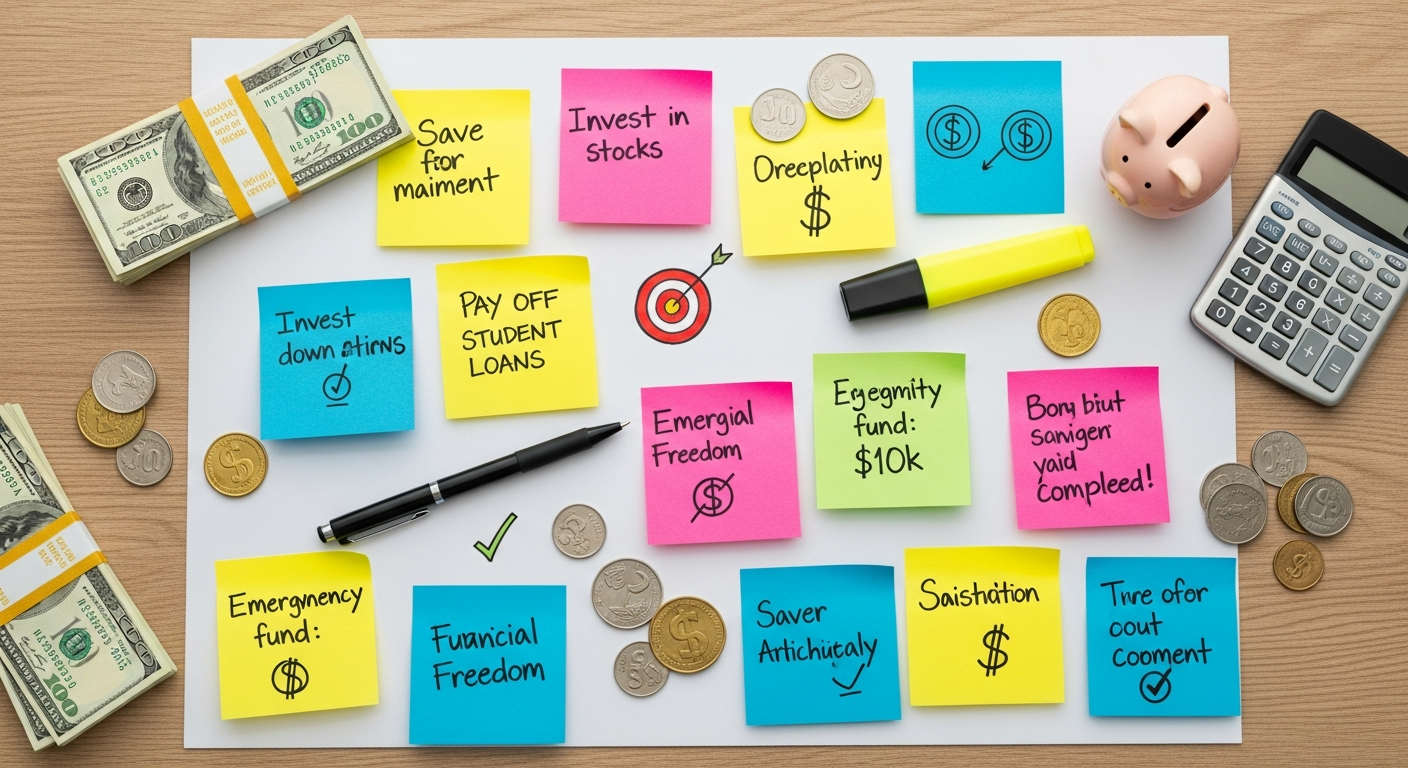
Build One Minimum-Viable Goal
Use a range when the future is uncertain. The minimum action keeps progress alive during a difficult month; the setback rule tells you what to adjust before abandoning the goal.
Why a Goal May Stall
A goal may stall when the amount is vague, the timeline assumes a perfect month, competing priorities are hidden, or there is no rule for setbacks. A smaller next action can preserve useful progress.
The SMART Goals Framework for Money
SMART goals are Specific, Measurable, Achievable, Relevant, and Time-bound. This framework transforms vague wishes into actionable plans that you can actually accomplish.
S - Specific
Your goal should answer the who, what, where, when, and why. Vague goals like "save more money" don't give you direction.
❌ Vague Goals:
- • "Save more money"
- • "Pay off debt"
- • "Invest for retirement"
- • "Get better with money"
✅ Specific Goals:
- • "Save $5,000 for emergency fund"
- • "Pay off $3,200 credit card debt"
- • "Contribute $7,500 across my IRAs in 2026, if eligible"
- • "Track expenses for 3 months"
M - Measurable
Include numbers so you can track progress. This creates accountability and lets you celebrate milestones.
Measurable Elements to Include:
- • Dollar amount ($5,000 emergency fund)
- • Percentage (increase savings rate to 20%)
- • Frequency (save $500 monthly)
- • Timeline (within 12 months)
A - Achievable
Your goal should stretch you but still be realistic based on your income, expenses, and current situation.
Reality Check Questions:
- • Can I actually save this amount with my current income?
- • What would I need to change to make this possible?
- • Have I accounted for unexpected expenses?
- • Is this timeline realistic given my other obligations?
R - Relevant
Your goal should align with your values, life situation, and other financial priorities.
Relevance Factors:
- • Does this goal support my life vision?
- • Is this the right priority for my current situation?
- • Will achieving this goal improve my financial security?
- • Does this goal fit with my family's needs?
T - Time-bound
Set a specific deadline to create urgency and help you plan the steps needed to achieve your goal.
Time-bound Examples:
- • "By December 31, 2026"
- • "Within 18 months"
- • "By my 35th birthday"
- • "Before our first child is born"
Types of Financial Goals by Timeline
Short-term Goals (1-12 months)
These provide quick wins and build momentum for larger goals. Focus on establishing good habits and creating financial stability.
Example Goals:
- • Build $1,000 starter emergency fund
- • Pay off one credit card
- • Track expenses for 3 months
- • Open high-yield savings account
- • Create and follow monthly budget
Success Strategies:
- • Make goals very specific
- • Check progress weekly
- • Celebrate small wins
- • Automate when possible
- • Start with the easiest goal
Medium-term Goals (1-5 years)
These goals require sustained effort and planning. They often involve larger amounts and significant lifestyle changes.
Example Goals:
- • Save $20,000 for house down payment
- • Pay off all consumer debt
- • Build 6-month emergency fund
- • Save for wedding or major trip
- • Start investment portfolio
Success Strategies:
- • Break into yearly milestones
- • Review progress quarterly
- • Adjust based on life changes
- • Consider increasing income
- • Stay motivated with vision boards
Long-term Goals (5+ years)
These are your big life goals that require consistent action over many years. They benefit most from compound growth and time.
Example Goals:
- • Save $1 million for retirement
- • Pay off mortgage early
- • Fund children's college education
- • Achieve financial independence
- • Build wealth for legacy
Success Strategies:
- • Focus on systems, not just outcomes
- • Automate as much as possible
- • Review annually
- • Leverage compound growth
- • Stay flexible with methods
Creating Your Action Plan
The Backwards Planning Method
Start with your end goal and work backwards to create monthly and weekly action steps.
Example: Save $6,000 Emergency Fund in 12 Months
Goal: $7,500 by December 31, 2026
Monthly target: $6,000 ÷ 12 months = $500/month
Weekly target: $500 ÷ 4 weeks = $125/week
Daily equivalent: $125 ÷ 7 days = ~$18/day
Action Steps:
- • Set up automatic transfer of $500/month to high-yield savings
- • Find extra $125/week through spending cuts or side income
- • Track progress weekly and celebrate $1,000 milestones
Goal Setting Worksheet
Complete This for Each Goal:
1. What exactly do you want to achieve?
Be as specific as possible with dollar amounts and timelines
2. Why is this goal important to you?
Connect it to your values and life vision
3. When do you want to achieve this?
Set a specific date or milestone
4. What obstacles might you face?
Identify potential challenges and how you'll overcome them
5. What's your first step?
What will you do this week to start moving toward this goal?
Staying Motivated and On Track
Progress Tracking Tips
- • Check progress weekly, not daily
- • Use visual progress bars or charts
- • Celebrate milestone achievements
- • Share goals with accountability partner
- • Keep a money wins journal
When to Adjust Goals
- • Major life changes (job loss, marriage, baby)
- • Consistently missing targets by 20%+
- • Goal no longer feels relevant
- • Unexpected financial opportunities
- • Better understanding of what's realistic
Sample Financial Goals by Life Stage
Ages 20-30: Building Foundation
- • Build $1,000 emergency fund within 6 months
- • Pay off high-interest debt within 2 years
- • Start contributing to 401(k) to get employer match
- • If eligible, work toward the 2026 combined IRA limit ($7,500)
- • Build credit score to 750+ within 3 years
Ages 30-40: Growing Wealth
- • Build 6-month emergency fund
- • Save 20% of income for house down payment
- • Increase retirement savings to 15-20% of income
- • Start saving for children's education
- • Consider increasing income through career advancement
Ages 40-50: Accelerating
- • Work toward the 2026 limits ($24,500 employee 401(k) deferral + $7,500 combined IRA limit)
- • Have 3-5x annual income saved for retirement
- • Consider paying off mortgage early
- • Fund education savings goals
- • Plan for catch-up contributions at age 50
Your Goal-Setting Action Plan
- 1. Write down 3-5 financial goals using the SMART framework
- 2. Categorize them by timeline (short, medium, long-term)
- 3. Create specific action steps for each goal
- 4. Set up automatic systems where possible
- 5. Schedule weekly progress check-ins
- 6. Find an accountability partner or advisor
- 7. Celebrate milestones and adjust as needed
- 8. Review and update goals annually